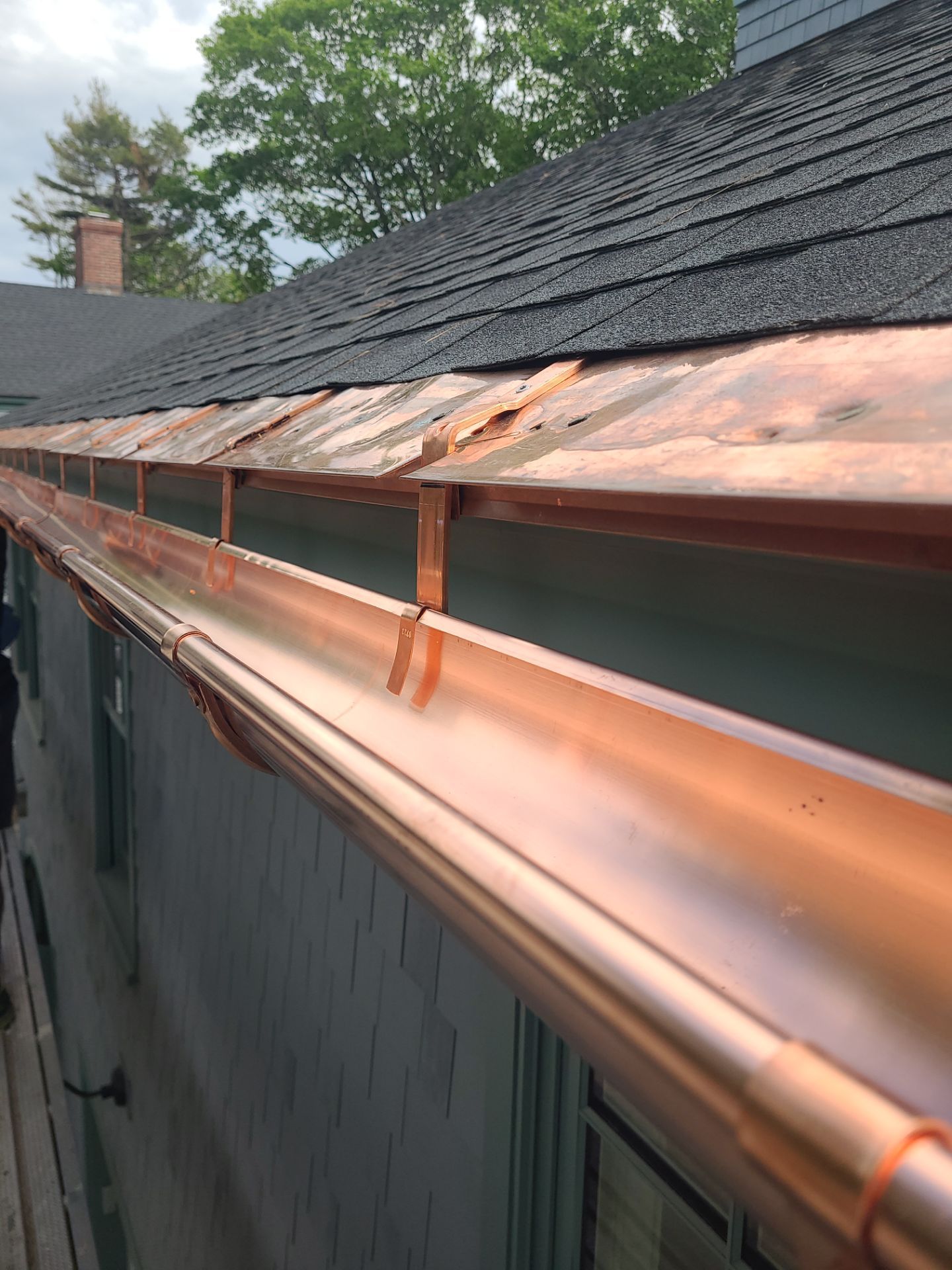
When homeowners in Ellsworth reach out to a roofing contractor for new gutters, size is usually one of the first choices they need to make. Most homes come down to either 5-inch or 6-inch gutters. Appearance plays a role, but the better choice depends on how well the finished system handles heavy rain, melting snow, and coastal weather once water starts moving across the roofline.
That’s why gutter sizing belongs in a larger drainage conversation. To help you compare 5-inch and 6-inch gutters more clearly, we’ll look at how each option affects the whole system, from runoff control to long-term protection.
How do I determine if I need 5 or 6 gutters?
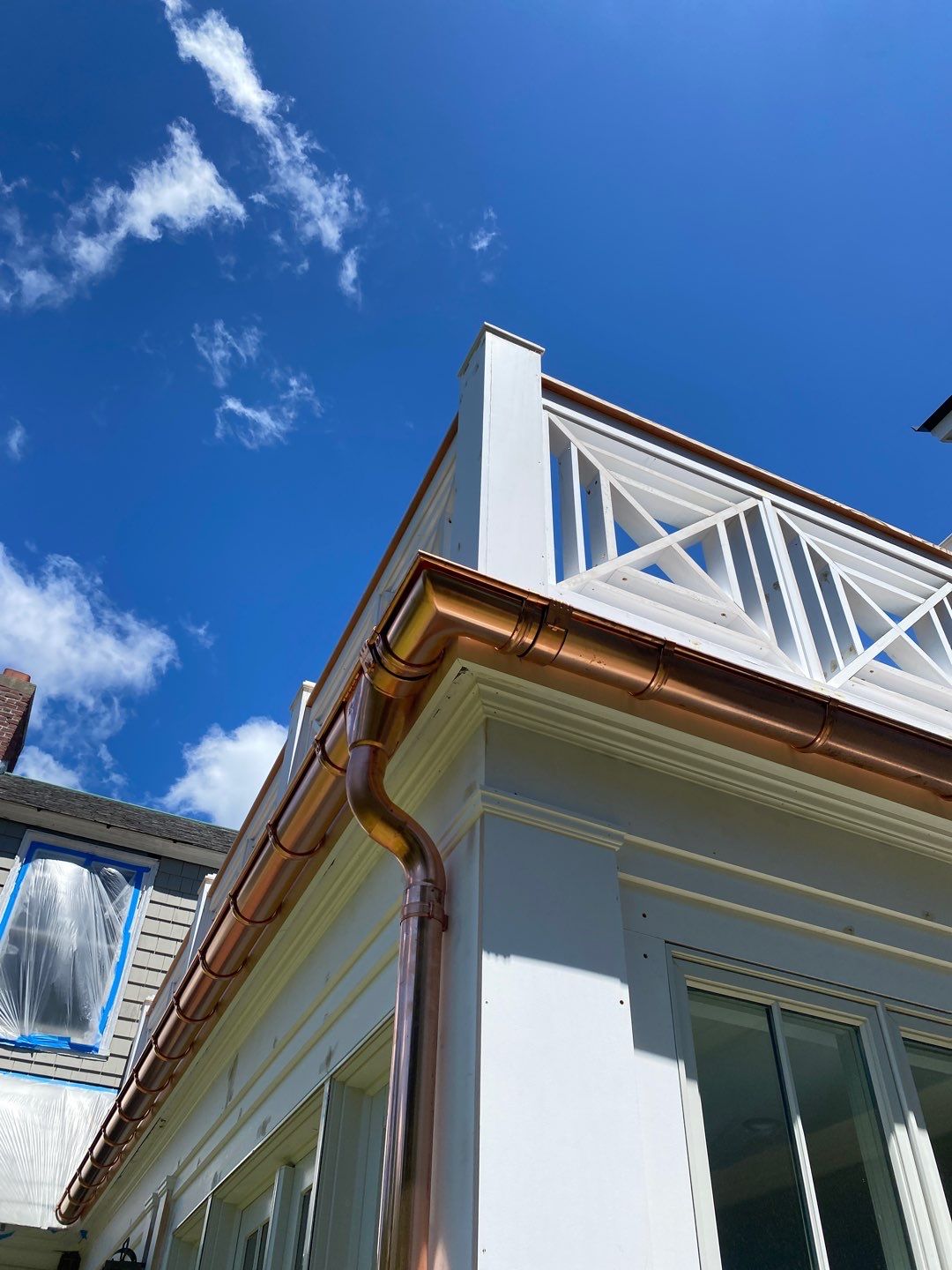
The right size depends on how much water the home collects and how efficiently the system moves that water away. Larger gutters can help in some situations, especially on steep roofs or homes with heavy runoff, but they are not automatically better simply because they hold more water.
Several parts of the home influence the decision at once. Roof valleys can dump large amounts of runoff into one section, long roof runs may overwhelm weak drainage layouts, and snowmelt can stress the system quickly during seasonal transitions. Maine weather only adds to that pressure, particularly along the coast where rain, wind, and freeze-thaw cycles regularly test exterior drainage systems.
The main sizing factors include:
- Roof size: Larger roof planes collect more runoff.
- Roof pitch: Steeper slopes move water faster toward the gutter.
- Valleys and long runs: Some sections naturally concentrate heavier flow.
- Roof complexity: Dormers, additions, and multiple roof sections change drainage patterns.
- Downspout placement: Water needs enough outlets in the right locations, so gutters and downspouts have to work together.
- Drainage conditions below: Runoff has to leave the system safely once it reaches the ground.
That’s why gutter sizing usually works best as part of a broader drainage plan. The gutter channel collects water, but the rest of the system still has to move it away from the house without overflowing or pooling near the foundation.
Does gutter size affect drainage performance?
Yes, gutter size can affect drainage because a wider channel can hold more runoff before it spills over. That extra capacity can help on larger homes, steeper rooflines, or sections where water reaches the gutter quickly during heavy rain. However, size is only one part of performance.
Water management starts before the gutter
Before runoff reaches the gutter, the roof surface, the protective underlayment beneath the shingles, and roofline details such as soffits, fascia, and trim all help control how water moves and how protected the home stays. Once that water reaches the edge, the gutter has to collect it cleanly, and the rest of the system has to move it away smoothly without backing up. A 6-inch gutter can still overflow if water can’t leave fast enough, while a well-planned 5-inch system can work exactly as it should.
Downspouts control the flow
Downspouts control how quickly water exits the gutter. To prevent backup during storms, you need the right kind of downspouts, enough of them, and proper placement near heavy-flow areas. Valleys, corners, and long gutter runs usually need the most attention because they collect runoff faster than simpler sections.
The full layout has to work together
Once water leaves the downspout, it still needs somewhere safe to go. If it drains too close to the foundation, across walkways, or into low areas that already stay wet, drainage problems can continue even with properly sized gutters. The best setup considers gutter size, downspout placement, ground slope, and discharge areas together.
Are 6-inch gutters always better?
No, 6-inch gutters are not automatically the better option. Some homes genuinely need the extra capacity, but others simply don’t produce enough runoff to justify the added size. A properly designed 5-inch system can perform extremely well when the roof shape, slope, and drainage layout all work together correctly. In many situations, planning matters more than width alone.
Appearance also influences the decision. Larger gutters naturally draw more attention to the roof edge, which can look perfectly appropriate on taller homes or broad rooflines but feel oversized on smaller structures. The better question usually isn’t whether larger gutters are better overall. It’s whether the entire drainage system matches the way water actually moves across the property.
What looks better, 5- or 6-inch gutters?
The better-looking option depends on the scale and proportions of the home. Smaller gutters usually look more natural on compact houses and traditional rooflines, while larger homes often carry 6-inch systems more comfortably. The goal is balance. Gutters shouldn’t dominate the roof edge visually, but they also shouldn’t look too small for the structure they’re protecting.
When 5-inch gutters usually look better
A 5-inch system usually fits cottages, smaller homes, and simpler rooflines more naturally. The narrower profile blends into the fascia without pulling too much attention toward the edge of the roof. Homes with modest overhangs or shorter fascia boards also look cleaner with a smaller system. On the right structure, 5-inch gutters feel proportional instead of undersized.
When 6-inch gutters usually look better
Larger homes generally carry 6-inch gutters more naturally, especially when the roofline is steep or visually substantial. Wider fascia boards and taller elevations help balance the added size so the system doesn’t feel bulky. That extra width can also look more appropriate on homes with broad roof planes or heavier runoff demands. On some structures, a smaller gutter simply looks too narrow compared to the scale of the exterior.
What are Ellsworth’s leading roofing companies?
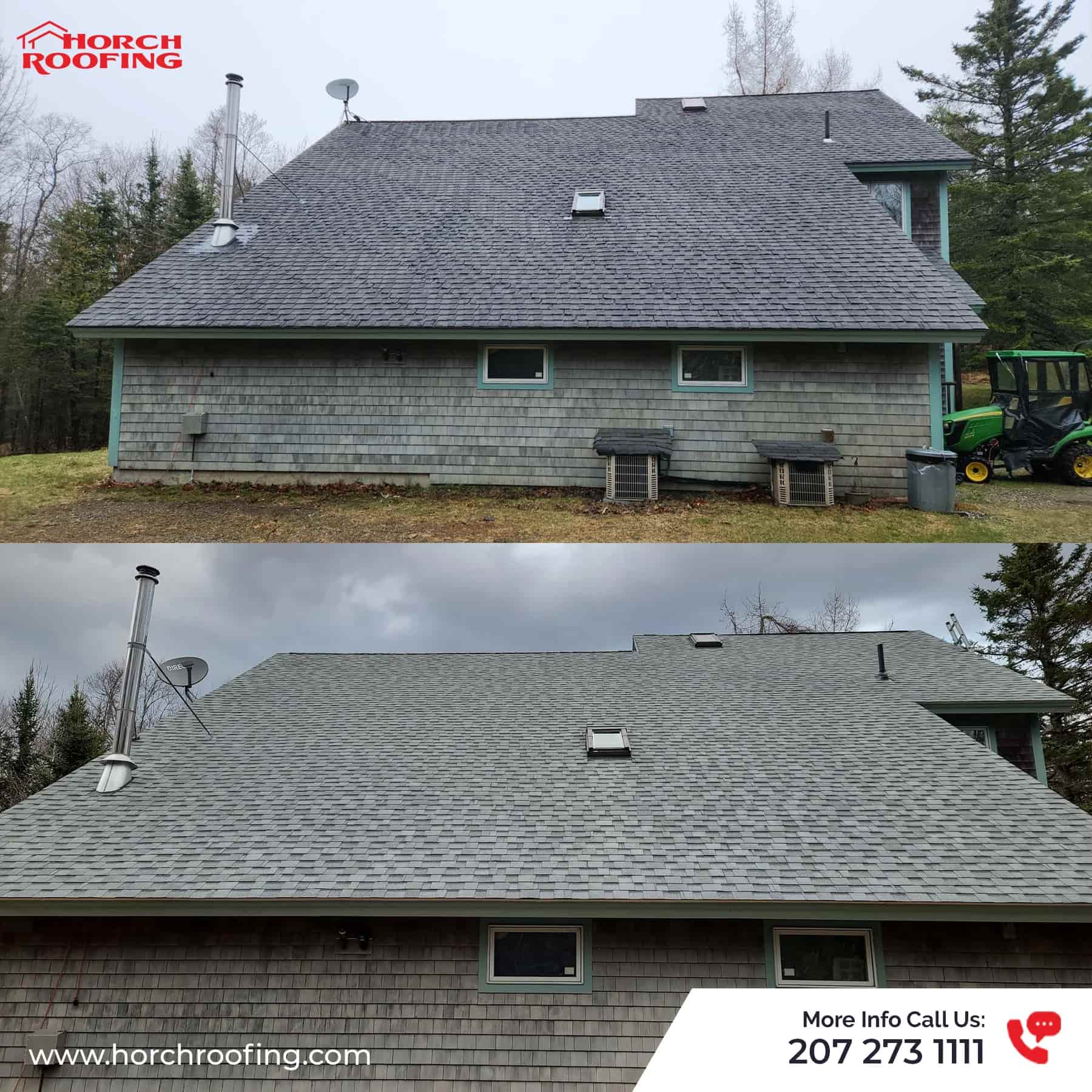
At Horch Roofing, we install seamless gutters that complement the look of your home while giving it dependable protection against rain, snowmelt, and everyday runoff. Our team helps you choose the right fit for your property, not just the larger or more obvious option, because gutters work best when they belong to the whole exterior system.
That same full-system approach guides everything we do. Since 2003, we’ve provided roofing solutions shaped around Maine’s weather and the needs of local homeowners, from asphalt shingles and standing-seam metal to EPDM rubber roofing, repair, and dispatch services.
Whether your home is close to Ellsworth Harbor Park & Marina or tucked into another part of Ellsworth or a nearby location, we bring careful workmanship, clear guidance, and durable materials to every project. Reach out today to schedule your free estimate.